What to see in Burgas and around
From the Sea Garden and bird lakes to the ancient towns of Nessebar and Sozopol, wild Ropotamo and the Strandzha mountains. Everything worth seeing on the coast, collected by town and resort.
- 9places and resorts
- 50+sights
- 1 hto most places from Burgas
Distances and times are approximate. Museum opening hours and prices change, so it is better to check them before your trip. The data was compiled from open guidebooks (list at the end of the page).
Where to go from Burgas
trip mapBurgas is a convenient base: from here you can reach most places within an hour. Click a name to go to its description.
Pomorie
≈ 14–20 km
Nessebar
≈ 37 km, bus every hour
Sunny Beach
≈ 35–42 km
Sozopol
≈ 35 km
Ropotamo and Primorsko
south of Sozopol
Tsarevo and Ahtopol
≈ 65 km by road
Sinemorets and Strandzha
the far south of the coast
Getting around without a car
- Airport — station. Bus No. 15 takes about 30 minutes from the station and runs roughly every 20 minutes from morning until late evening (according to guidebooks, check the timetable).
- Burgas — Nessebar. Buses run every hour. Between the bay resorts themselves (Nessebar, Sunny Beach, Ravda) local buses run about every 15 minutes.
- Sozopol. About 35 km along the E87: by bus or car. On the way you can stop at the Poda reserve.
- To Strandzha. It takes longer and is easier by car: the road follows the coast. Or order an excursion with a guide.
Burgas
A coastal city on the Gulf of Burgas, surrounded by lakes. It has the Sea Garden leading to the beach, museums, cathedrals, a lively waterfront and festivals of every kind, from sand sculptures to folklore.
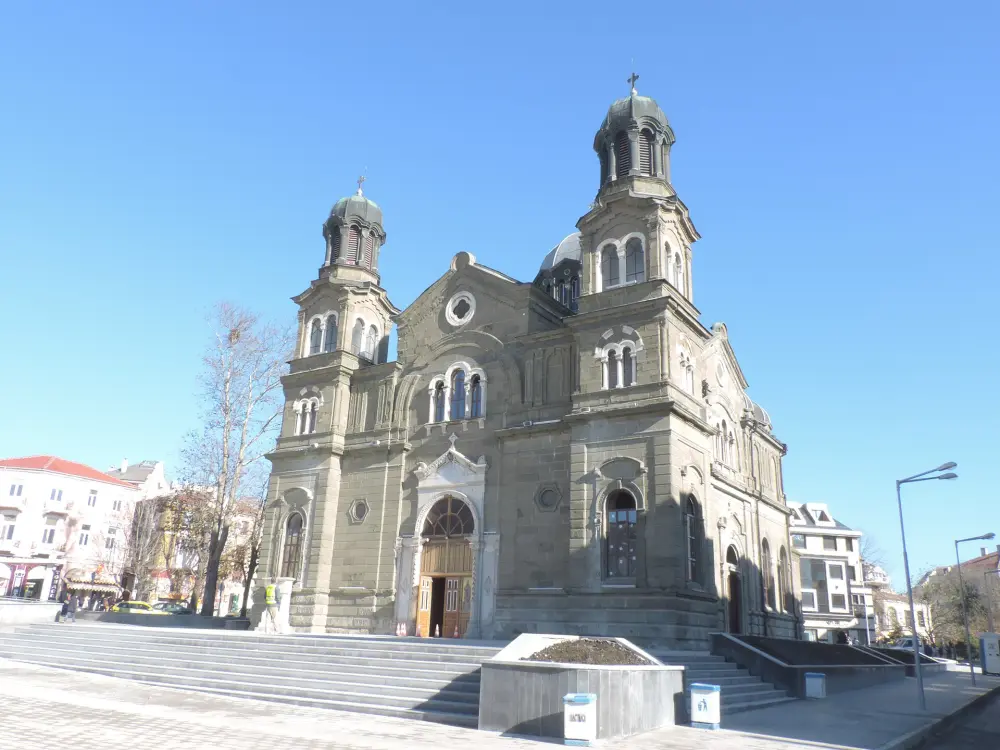
Sea Garden
A big park from the station to the beach. Steps lead down to the sandy shore, and further towards the salt lakes the paths become “wild”. Here are the Sea Casino, the amphitheatre “The Snail” with evening concerts, and sculptures.
📍 On mapThe Bridge (Sea Bridge)
A T-shaped pier with a viewing platform over the sea. The best view of the bay, with a café nearby. In summer boats to St. Anastasia Island also leave from here.
📍 On mapSaints Cyril and Methodius Cathedral
The main church in the city centre. Nearby on Troika Square are early-20th-century buildings. Not far away is also the Armenian church Surp Hach.
📍 On mapArt Nouveau railway station
The Central Station of the 1930s with a clock tower. Built to the same plans as the station in Varna.
📍 On mapEthnographic Museum
69 Slavyanska St, in an 1873 house at the southern edge of the Sea Garden. Exhibitions of everyday life, crafts and traditions of the region.
📍 On map🌐 WebsiteArchaeological Museum
21 Bogoridi St. Greek, Roman and Byzantine finds, including from the Thracian era.
📍 On map🌐 WebsiteHistory and natural history museums
History — 31 Lermontov St. Natural History — 30 Fotinov St: flora, fauna and themed exhibitions.
📍 On map🌐 WebsiteArt Gallery
The Gallery of Fine Arts is housed in a former synagogue in the Secession style. There are private galleries too.
📍 On mapSt. Anastasia Island
A small island in the bay with a monastery: the only surviving medieval island monastery in the Black Sea. In summer boats leave from the Bridge (check the timetable).
📍 On mapNorth Beach and Central Beach
Central Beach by the Bridge — for walking and swimming. North — surfing, kitesurfing and diving schools.
📍 On map“Bulgarian Dead Sea”
Salt pans between Lake Atanasovsko and the sea: healing brine and black mud. According to guidebooks it is open daily, with an entrance fee.
Aquae Calidae mineral baths
About 15 km north-west of the centre, near the village of Banevo. The water is +41 °C with light mineralisation. Buses run from the “New Post” stop.
Active leisure
Karting (320 m track, 126 Stefan Stambolov Blvd), paragliding, quad safaris near the village of Marinka between Burgas and Sozopol.
Burgas lakes
A group of lakes on the Via Pontica bird migration route lies around the city. It is one of the best places in Europe for birdwatching, especially during the autumn migration.
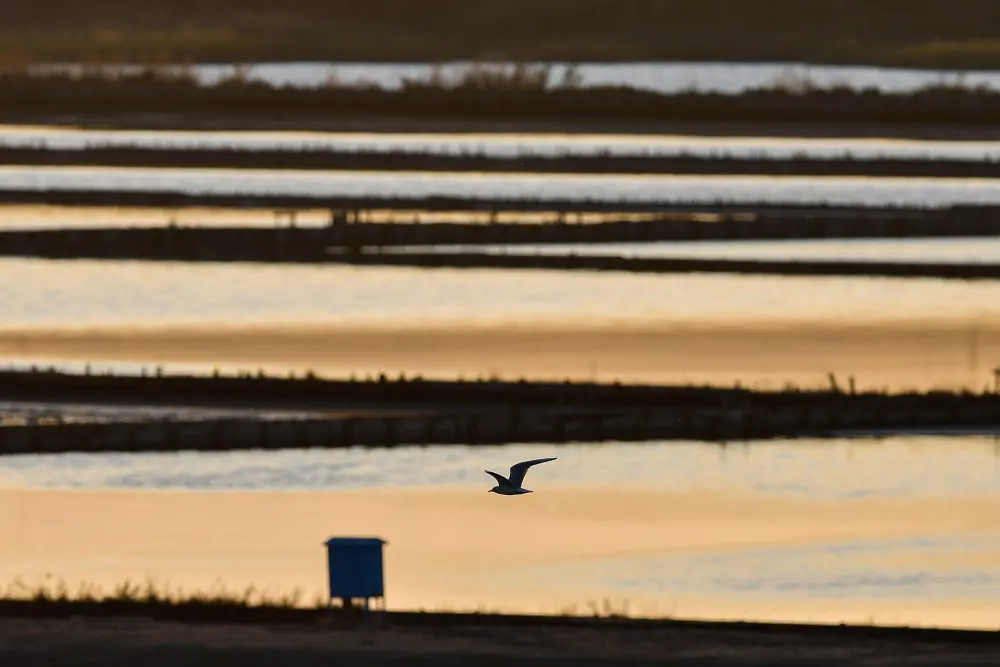
Lake Vaya (Burgas)
The largest natural lake in Bulgaria, west of the city. Salinity 4–11%. The water is murky and swimming is not recommended, but carp fishing is popular. More than 250 bird species have been recorded.
📍 On mapLake Atanasovsko
North of Burgas. Salinity 20–27.5%, salt is produced here and the water is pink in places. More than 70% of Bulgaria's bird species occur in this zone. Part of the lake is a reserve with restricted access; the Burgas — Nessebar — Varna road crosses the lake.
📍 On mapLake Mandra
South of Burgas. It was salty until 1934, but after a dam was built it became fresh. Four rivers flow into it.
📍 On mapPoda Nature Reserve
Ten minutes' drive south of Burgas on the road to Sozopol (E87, public transport available). A nature conservation centre with three viewing terraces. More than 260 bird species have been recorded here: pygmy cormorants, pelicans, red-breasted geese.
📍 On mapFlamingos
They are most often seen around August on the salt pans and lakes north of Burgas. Bring binoculars.
Pomorie
An old resort on a narrow peninsula with a lagoon, salt works and healing mud. Calmer and more intimate than the neighbouring noisy resorts.
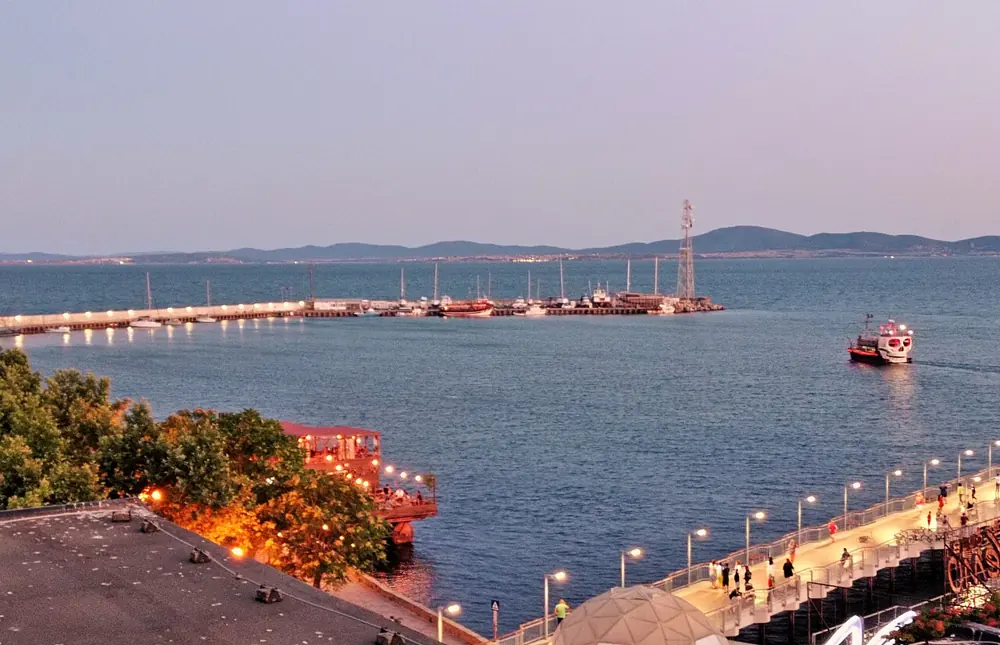
Salt Museum
The only salt museum in Eastern Europe and in Bulgaria, founded in 2002. It shows modern production and old methods. Next to it is the lake's visitor centre.
📍 On mapLake Pomorie
A natural hypersaline lagoon and an important bird habitat. Salt works have operated since ancient times.
📍 On mapHealing mud
Mud from the lake is used for wellness treatments. According to guidebooks it is free; keep it on the skin for no more than 20 minutes a day.
📍 On mapSt. George Monastery
An active monastery in the new part of town. Entry to the grounds and the museum is free (according to guidebooks).
📍 On mapNessebar
Ancient Mesembria on a peninsula, inscribed on the UNESCO World Heritage List for its traditional architecture and ancient churches. It has the most churches per capita in Bulgaria, and many are older than Bulgaria itself.
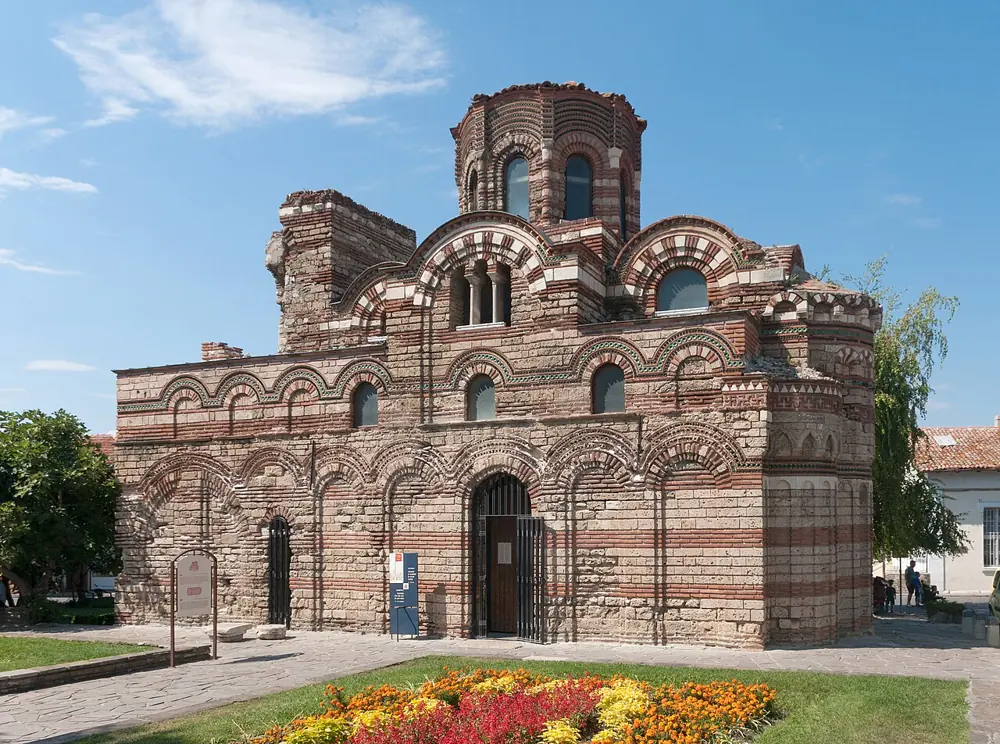
Church of Christ Pantocrator
13th–14th century. One of the best-preserved medieval churches in the country, with a richly decorated façade and interior. It is now an art gallery.
📍 On mapRuins of St. Sophia
A basilica of the 5th–6th century, one of the city's main symbols. According to legend there were about 40 churches in Nessebar; 23 are known today.
📍 On mapArchaeological Museum
Founded in 1956, at the entrance to the old town (2A Mesembria St). Pottery, statues and jewellery up to 3,000 years old.
📍 On map🌐 WebsiteGates of the old town
A favourite photo spot. Part of ancient Mesembria lies under water.
How to stroll
The old town is compact, so walk. Park by the entrance; the cobbles and narrow streets are awkward for wheelchairs and prams.
Sunny Beach and the bay resorts
Bulgaria's biggest beach resort and a chain of neighbouring villages along the Bay of Nessebar — for those who love a lively holiday.
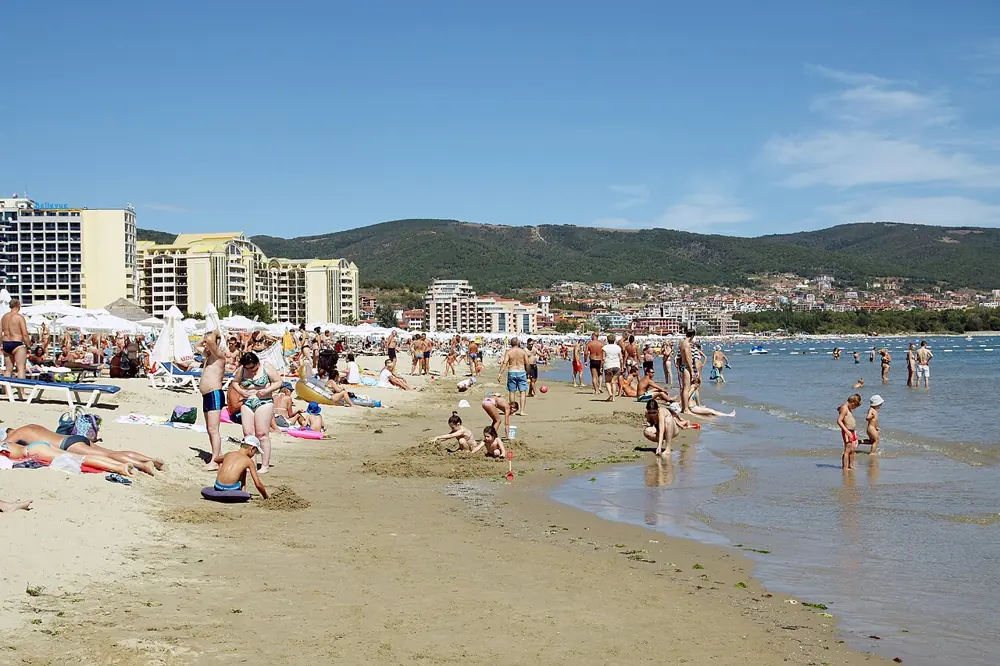
Sunny Beach
The country's largest resort in the middle of the Bay of Nessebar. A wide beach, many hotels, restaurants and entertainments.
📍 On mapWater parks
Action Aquapark is in the western part of Sunny Beach, on a site of about 24,000 m². Aqua Paradise is near Nessebar.
📍 On mapSveti Vlas
At the foot of the southern slopes of the Stara Planina. Calmer and quieter than Nessebar and Sunny Beach.
📍 On mapRavda and Aheloy
Ravda lies between Nessebar and Aheloy: a continuous resort zone together with Sunny Beach. Aheloy is further south.
📍 On mapSozopol
The oldest town on the Bulgarian coast: Greek Apollonia, founded in 610 BC by settlers from Miletus. Wooden houses, narrow streets and quiet coves — calmer than Nessebar.
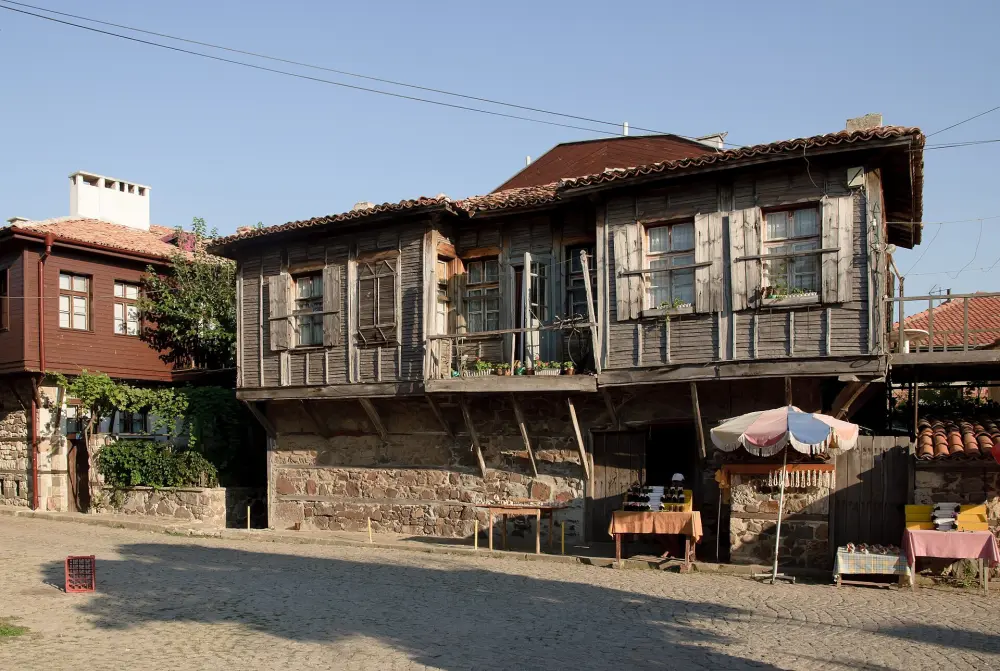
Old Town
A museum-reserve since 1974: more than 180 houses from the mid-18th to early 19th century in Black Sea style. Well-known houses: Marieta Stefanova's, Kreanoglu's, Todor Zagorov's, Kurtidi's, Dimitar Laskaridis's.
📍 On mapArchaeological Museum
Finds from ancient Apollonia, including traces of the Temple of Apollo the Healer with a 13 m statue of the god (according to ancient sources).
📍 On mapChurch of Saints Cyril and Methodius
The relics of John the Baptist are kept here: found in 2010 during excavations on St. Ivan Island. Pilgrims come here.
Beaches
Central and Harmanite in the town itself. Nearby are Kavatsi and “Golden Fish”.
“Apollonia” festival
An arts festival in early September; in 2024 it marked its 40th anniversary.
Rock jumping
By the old town there are rocks for swimming and jumping, but the sea is deep and can be rough — only for confident swimmers.
Ropotamo, Primorsko and Kiten
Wild nature and the best sandy beaches on the way to Tsarevo. Good for those who want quiet, a river and wide beaches.
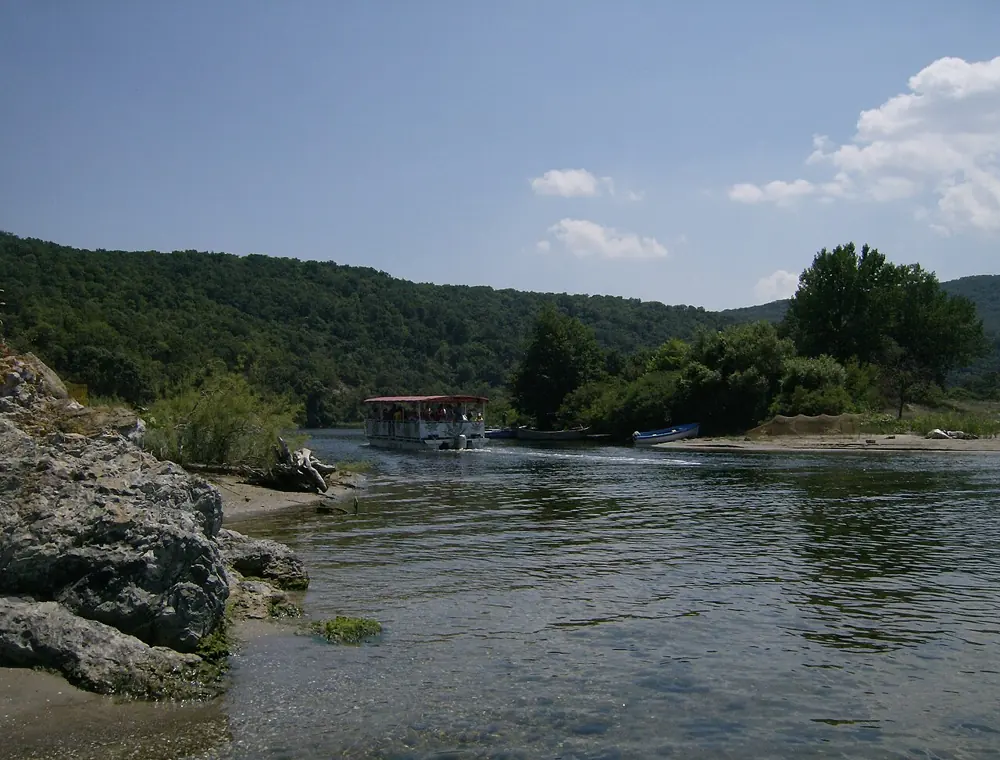
Ropotamo Reserve
At the river mouth: a lagoon with a sandbar, dunes, rocks, the Arkutino marsh and a wet forest. St. Thomas Island is the only place in Bulgaria where cacti grow wild. Boat trips on the river.
📍 On mapPrimorsko
A resort on a cape with two of the country's best natural beaches: fine sand to the north and south of the cape. Popular with young people: night clubs and bars.
📍 On mapKiten
A small town with plenty of budget hotels and a pleasant beach. A calm choice for an inexpensive holiday.
📍 On mapLozenets
A resort popular with well-known Bulgarians. Nearby is the Lalov Egrek water centre with one of Europe's largest diving centres.
📍 On mapTsarevo and Ahtopol
The southern edge of the coast: the Strandzha mountains meet the sea. The road follows the shore through Sozopol and Primorsko. Lozenets is 7 km from Tsarevo.
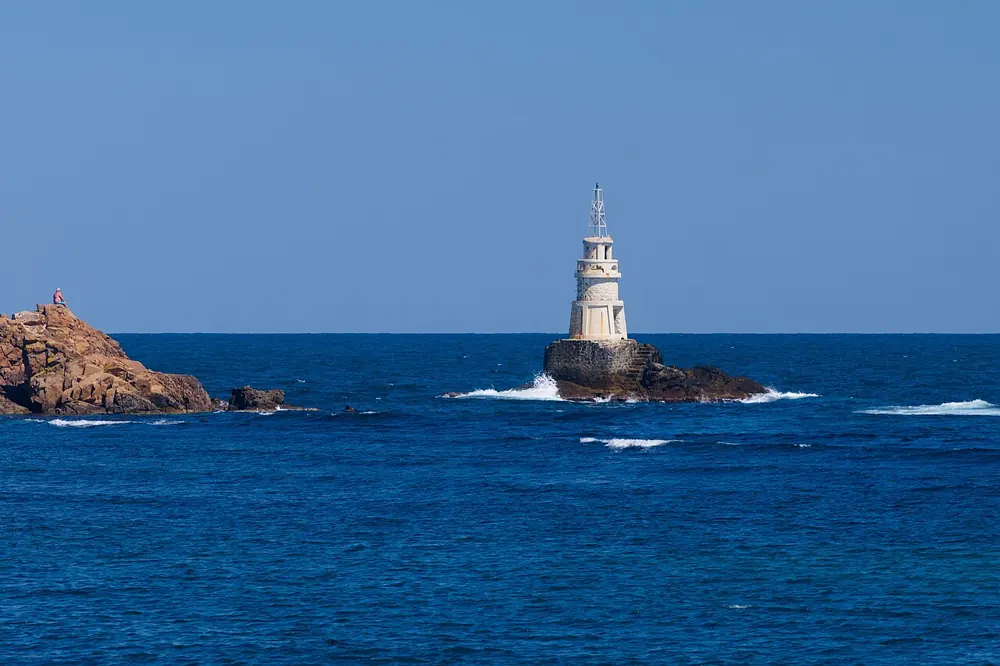
Tsarevo
A coastal town at the foot of the Strandzha mountains: mountain air and beaches combined. A starting point for trips into Strandzha.
📍 On mapAhtopol
The southernmost town on the Bulgarian coast, on a cape, in Strandzha Nature Park. Remains of a fortress, the 12th-century St. Yani monastery, a fountain with a stone horseman and the 1796 Church of the Ascension. A Greek colony around 440–430 BC.
📍 On mapPersimmons and pomegranates
A mild climate: Ahtopol has the country's largest persimmon and pomegranate plantation.
Sinemorets and Strandzha
Bulgaria's largest nature park — 1,161 km², established on 25 January 1995. Rivers, forests, wild beaches and ancient Thracian sanctuaries.
Sinemorets
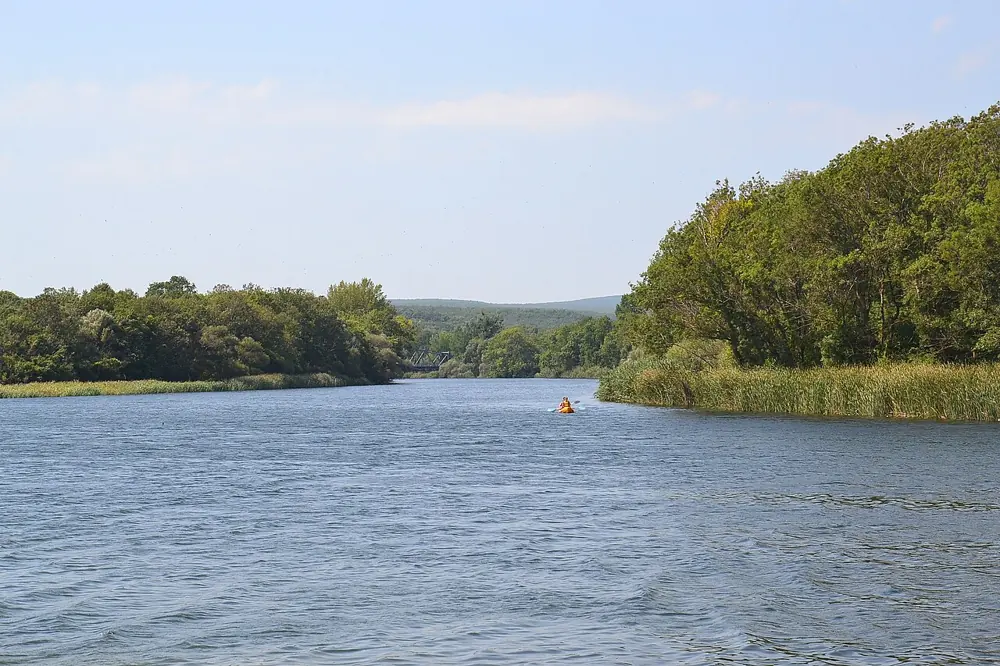
A village at the mouth of the Veleka with its characteristic sandbar. Two beaches: at the mouth of the Veleka and Butamyata. Ahtopol is 6 km north, Rezovo 11 km south.
📍 On mapVeleka River
The longest river in Strandzha — 147 km. The lower course is a seasonally flooded forest. Boat trips set off from Sinemorets.
📍 On mapSilistar
The coast between Sinemorets and Rezovo: the highest number of plant species per km² in Bulgaria. One of the most picturesque beaches.
📍 On mapPark reserves
Five reserves: Silkosiya (the oldest, 1933), Sredoka, Tisovitsa, Uzunbodzhak and Vitanovo. Special rules apply in the reserves, check the restrictions.
📍 On mapNestinarstvo
A barefoot ritual on smouldering embers on 3 and 4 June. In its authentic form it has survived only in the village of Balgari.
Thracian sanctuaries
Mishkova Niva (about 3 km from Malko Tarnovo), the Propada necropolis and the Kamenska Barchina sanctuary.
📍 On mapEvents and festivals
calendar of the yearIf you can choose your travel dates, pick them around an event.
- end of AprilYachting Week · Burgas, by the port and the Bridge
- end of April — early MayFlora · Sea Garden, by North Beach; a flower show since 1985
- 11, 13, 15 May 2027Eurovision 2027 · Arena Burgas
- 3–4 JuneNestinarstvo · the village of Balgari, Strandzha
- JulyBurgas and the Sea · Pop festival on the shore
- July — AugustSand sculptures · Sea Garden, paid tickets
- mid-AugustSpirit of Burgas · Central Beach, three days
- end of AugustInternational Folklore Festival · Burgas, held since 1965
- early SeptemberApollonia · Sozopol
Order an excursion
via our partnersChoose a destination and open a selection of tours from our partners GetYourGuide and Viator. The price is the same for you, and we receive a small commission, which helps us run the site. The links are marked as affiliate links.
Strandzha, Ahtopol, Sinemorets
The park, the Veleka and the southernmost town.
The “Order” buttons lead to our partners’ websites, where the order is placed. We do not take orders ourselves.
Book with partners
via our partnersChoose a service and open our partner’s site. The price is the same for you, and we receive a small commission, which helps us run the site. The links are marked as affiliate links.
Accommodation
Hotels and apartments for your travel dates.
The “Order” buttons lead to our partners’ websites, where the order is placed. We do not take orders ourselves.
Sources
- Burgas — Wikivoyage ↗
- Sozopol — Wikivoyage ↗
- Nesebar — Wikivoyage ↗
- Bulgarian Black Sea Coast — Wikivoyage ↗
- Burgas — Wikipedia ↗
- Strandzha Nature Park — Wikipedia ↗
- Ahtopol — Wikipedia ↗
- Nesebar Architectural-Historical Reserve — tourism.government.bg ↗
- Pomorie — Wikivoyage ↗
Some data (prices, opening hours, timetables) in the sources dates from 2021–2023 and may have changed.